
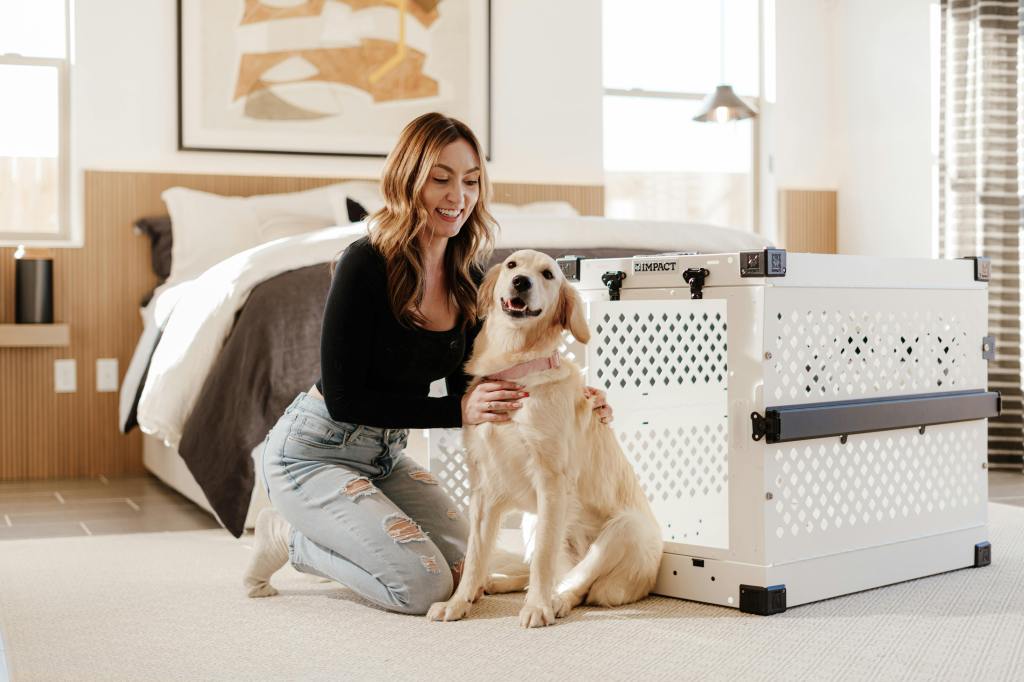
Place training is an essential technique in building a dog’s impulse control, focus, and ability to settle on command. It teaches dogs to go to a designated area, remain calm, and stay until released. While many trainers use mats or platforms for place training, crates are often overlooked as powerful reinforcers of the same principles. In fact, crates naturally align with and strengthen place training behaviors, especially for dogs that struggle with overstimulation or anxiety.
Using crates as part of your place training strategy builds clearer boundaries and promotes emotional regulation. A crate offers structure, security, and physical cues that help your dog understand what is expected of them. This combination not only reinforces stillness and calm but also strengthens obedience over time. For anxious dogs in particular, the enclosed space of the crate can act as a comforting zone that makes practicing “place” less overwhelming.
How Crates Enhance Place Training Skills
The essence of place training lies in teaching your dog to remain in a defined area without moving until given permission. Crates provide a natural “place” that is easier for dogs to grasp and respect.
Benefits of using crates in place training include:
- Clear physical boundaries for easier comprehension
- Reduced distractions, promoting better focus
- Enhanced stillness and calm behavior
- Easier management of dogs who struggle with impulse control
- Encouragement of voluntary relaxation
- Development of emotional stability through structure
Crates reinforce the same behavioral expectations as a place mat—stay put, remain calm, and wait for direction—making them ideal tools for early-stage or anxious learners.
Using the Crate as a Transitional Place Tool
Crates can act as a stepping stone between confinement and open “place” training. If your dog can calmly relax in a crate, transitioning to a less defined area like a mat becomes much smoother.
- Begin by reinforcing calm crate behavior
- Introduce place commands while the dog is in the crate
- Transition to an open mat with the same cue and expectations
- Gradually increase distractions as your dog progresses
- Use crate time to practice long durations before advancing
- Incorporate the crate into daily routines for consistency
This gradual progression supports confidence and success while maintaining the structure dogs need to thrive.
Supporting Anxious Dogs with Crate-Based Place Work
For dogs with anxiety, open space can sometimes feel unsafe or unmanageable. Crates provide a cozy, contained area that reduces stimuli and builds comfort.
- Crates block excess visual or auditory input
- They mimic den-like safety, promoting relaxation
- The structure of the crate helps prevent pacing or reactivity
- Cue-based crate entry reinforces control over emotional reactions
- Supports desensitization to overstimulating environments
A study on canine stress management found that dogs provided with enclosed, structured spaces during behavior training exhibited reduced signs of anxiety and greater compliance (source).
When a dog feels secure, they’re more likely to comply with training expectations and show improved focus. Crates play an essential role in achieving this stability.
Crate Time as a Reinforcement Break
During place training, crate time can serve as a productive “reset” between repetitions. Instead of allowing your dog to wander or get overstimulated, placing them in the crate for a short duration helps maintain momentum and focus.
- Use the crate to calm down after high-excitement activities
- Alternate between mat work and crate time to reinforce place behavior
- Reward quiet crate time as part of the overall training session
- Build crate time into the daily routine to support overall balance
- Use crate breaks as a way to manage household distractions
This integration creates a smooth rhythm of activity and rest, which helps dogs regulate themselves emotionally.
Advancing Place Training Using Crates
Once your dog is familiar with both place training and crate cues, you can use the crate to reinforce more advanced skills:
- Practice longer place durations inside the crate with the door open
- Use the crate to teach calm entries and exits from “place”
- Introduce mild distractions while your dog remains calm in the crate
- Combine place and crate cues for fluid transitions
- Add challenge by working on place duration with you out of the room
These techniques refine your dog’s understanding of “place” by anchoring it to a structured, familiar environment. Over time, your dog learns that calm behavior—whether on a mat or in a crate—is consistently rewarded.
Crates and Long-Term Behavior Management
Beyond training sessions, crates help reinforce the core elements of place training in everyday life. They serve as consistent reminders of boundaries and expectations.
- Encourage calm downtime when overstimulation occurs
- Help manage multiple dogs in a household by assigning individual spaces
- Reinforce calm transitions during travel or vet visits
- Offer a predictable retreat during social events or guests’ arrival
- Help puppies and newly adopted dogs acclimate to household rules
Integrating crate use into a dog’s routine ensures long-term benefits and supports a calm, balanced mindset. According to experts, the structure provided by crate routines significantly aids in behavioral shaping and anxiety reduction (source).
Conclusion
Crates are more than confinement tools—they’re powerful allies in reinforcing place training principles. By providing structure, minimizing distraction, and encouraging calm behavior, crates help dogs internalize the core lessons of place training.
For dogs that need extra support—especially those dealing with anxiety—crates can bridge the gap between basic obedience and real-world calm. As dogs gain confidence, they transition more easily between the crate and other designated “place” areas with trust and control.To support your training with high-quality, dog-friendly crate solutions, visit Impact Dog Crates.
 Top Dog Training Tips
Leave a comment