

High-energy dogs bring joy and enthusiasm to any household, but their boundless energy can make training a challenge—especially when it comes to crate training. You might worry that crating a dog who’s constantly on the move will feel like trying to cage a tornado. But with the right approach, crate training can become a safe, positive experience for even the most energetic dogs.
Crate training a high-energy dog is not just about containment—it’s about creating a structured environment that promotes calm behavior and provides a designated space to unwind. In this article, we’ll cover practical tips and techniques to successfully crate train your lively pup without overwhelming them.
Why Crate Training Is Essential for High-Energy Dogs
Crate training provides structure and routine, which is especially beneficial for high-energy dogs who can become overstimulated or anxious without boundaries. According to the American Kennel Club (AKC), crate training helps prevent destructive behaviors and teaches dogs to settle down when needed.
For high-energy dogs, the crate becomes more than just a safe space—it’s a place to decompress and learn self-control.
Benefits of Crate Training for High-Energy Dogs:
- Promotes Calm Behavior: Helps dogs learn to relax on command.
- Prevents Destructive Habits: Keeps your dog from chewing, digging, or knocking things over when unsupervised.
- Supports Routine: Provides consistency, which helps manage energy levels.
- Aids in Housebreaking: Encourages bladder control and minimizes accidents.
Step 1: Choose the Right Crate
High-energy dogs need a crate that’s both durable and spacious enough to move comfortably. A flimsy crate won’t hold up against a dog who may paw or chew at it.
Recommended Crate: Impact Dog Crates
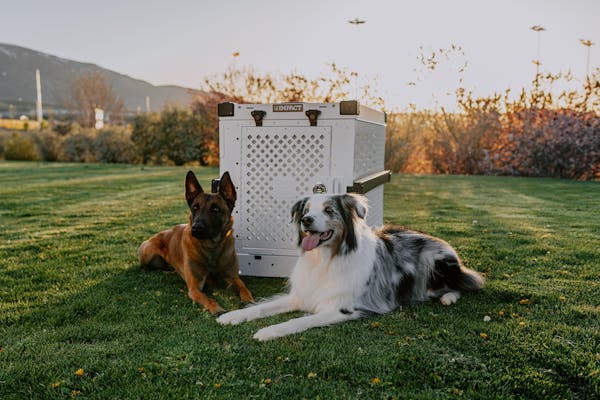
Impact Dog Crates are designed to withstand even the most determined dogs. Made from high-quality aluminum, these crates are chew-proof, escape-proof, and provide excellent ventilation. They’re the perfect choice for high-energy breeds that might otherwise break free from traditional plastic or wire crates.
Features to Look For:
- Sturdy Construction: Prevents escape and withstands heavy use.
- Ventilation: Keeps your dog cool during periods of excitement.
- Spacious Interior: Allows your dog to stand, turn around, and lie down comfortably.
- Secure Latches: Keep even the most persistent dogs safely contained.
Step 2: Exercise Before Crate Time
One of the most important steps in crate training a high-energy dog is to burn off excess energy before crating. An energetic dog that hasn’t had a chance to release their energy will likely resist crate time, bark, or scratch at the door.
Pre-Crate Activities:
- Long Walks: A brisk 30-60 minute walk helps tire your dog out.
- Fetch or Tug-of-War: Intense play sessions channel energy and excitement.
- Training Drills: Practice commands and mental exercises to engage their brain.
Pro Tip:
Schedule crate time immediately after exercise to make the transition smoother. Your dog will be more inclined to rest after physical activity.
Step 3: Make the Crate Inviting
Creating a cozy, welcoming environment inside the crate helps your dog feel comfortable and relaxed.
How to Make the Crate Cozy:
- Soft Bedding: Use a durable, washable bed that fits snugly in the crate.
- Favorite Toys: Include a chew-resistant toy or treat dispenser to keep your dog entertained.
- Calming Scents: A blanket with your scent can help ease anxiety.
- Cover the Crate: Drape a light blanket over the crate to create a den-like atmosphere.
By making the crate feel like a personal retreat, your dog will be more inclined to settle down and enjoy their time inside.
Step 4: Gradually Introduce Crate Training
High-energy dogs may initially resist being confined, so it’s essential to introduce the crate gradually and positively.
Training Steps:
- Leave the Door Open: Allow your dog to explore the crate without feeling trapped.
- Toss in Treats: Encourage your dog to enter willingly by placing high-value treats inside.
- Reward Calm Behavior: Praise your dog when they lie down or sit quietly in the crate.
- Short Sessions First: Start with just a few minutes and slowly increase the duration.
Avoid Force:
Never push or shove your dog into the crate, as this will create negative associations. Instead, use positive reinforcement and patience.
Step 5: Use Mental Stimulation in the Crate
High-energy dogs often become restless if they feel bored or unengaged. Providing mental stimulation inside the crate can keep your dog occupied and content.
Crate Toys and Puzzles:
- KONG Toys: Stuff with peanut butter or freeze for longer-lasting entertainment.
- Puzzle Feeders: Challenge your dog to solve a simple puzzle for treats.
- Chew Toys: Durable bones or rubber toys satisfy their urge to chew.
Interactive Time:
Leave a toy that requires problem-solving to keep your dog mentally busy. This not only reduces boredom but also encourages calm focus.
Step 6: Establish a Crate Routine
Consistency is key when crate training a high-energy dog. Establishing a regular schedule helps your dog know what to expect and makes crate time a normal part of daily life.
Sample Routine:
- Morning: Walk, breakfast, crate time.
- Midday: Exercise session, brief crate time.
- Evening: Play, dinner, crate wind-down before bed.
Consistency in routine helps your dog associate crate time with rest and relaxation rather than punishment or isolation.
Step 7: Addressing Barking and Resistance
High-energy dogs may bark or whine when first crated, especially if they’re not used to confinement.
How to Manage Barking:
- Ignore Attention-Seeking Barking: Wait for quiet before offering praise or letting them out.
- Cover the Crate: Reducing visual stimuli can help calm your dog.
- Play Calming Sounds: Soft music or white noise can help mask outside noises.
According to the National Library of Medicine (NIH), structured environments that reduce sensory overload help lower stress and promote calmness in dogs.
Step 8: Gradually Increase Crate Time
Once your dog becomes comfortable with short periods, gradually extend the time spent in the crate. Always make sure your dog has had plenty of exercise and a potty break before longer crate sessions.
Training Tip:
Monitor your dog’s behavior to ensure they remain comfortable and calm. If your dog shows signs of stress, reduce the time and build up more gradually.
Final Thoughts: Making Crate Time a Positive Experience
Crate training a high-energy dog can feel like a daunting task, but with the right strategies and a consistent approach, it becomes manageable—and even enjoyable for your dog. Remember, the key is to make the crate a positive, rewarding space where your dog feels secure and relaxed.
Choosing a durable, high-quality crate like those from Impact Dog Crates ensures that even the most energetic dogs remain safely contained without causing damage or escaping. These crates are built to withstand heavy use while providing comfort and security.
By combining adequate exercise, positive reinforcement, and gradual training, you’ll soon see your high-energy dog embrace crate time as a welcome break rather than a restriction. Stay patient, stay consistent, and watch your dog thrive with the right training approach!
 Top Dog Training Tips
Leave a comment