

Crate training can be a game-changer when done right. It provides your dog with a safe, cozy retreat while also helping with housebreaking, behavior management, and anxiety reduction. However, many dog owners worry that crating might feel like punishment or cause stress.
The key to successful crate training is to make it a positive, enjoyable experience that your dog associates with comfort and safety. In this article, we’ll walk you through the best strategies to create a positive crate training experience that your dog will love.
Why Crate Training Is Important
Crates are not just containment tools; they are vital for building good habits and providing a secure space for your dog. According to the American Kennel Club (AKC), crate training helps with:
- Housebreaking: Dogs naturally avoid soiling their sleeping area.
- Behavior Management: Helps reduce destructive behaviors when unsupervised.
- Travel Safety: Keeps your dog secure during car rides.
- Anxiety Reduction: Provides a quiet retreat from household chaos.
However, to reap these benefits, it’s crucial to introduce the crate correctly and make it a positive part of your dog’s life.
1. Choose the Right Crate for Comfort and Safety
The first step in making crate training positive is selecting a crate that suits your dog’s needs and provides maximum comfort.
Recommended Crate: Impact Dog Crates
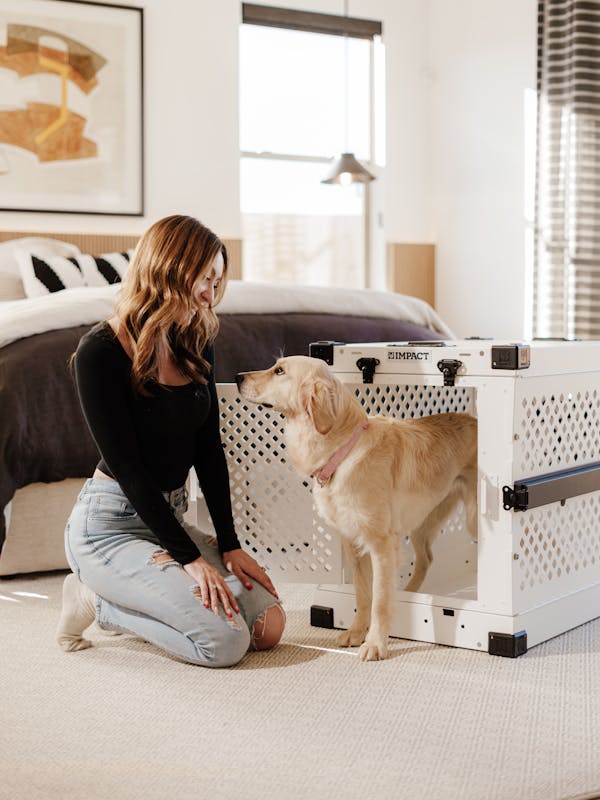
Impact Dog Crates are known for their durability, safety, and design that promotes comfort. Made from high-quality aluminum, they are chew-proof, escape-proof, and well-ventilated, making them ideal for training even the most determined dogs.
Key Features to Look For:
- Durability: Sturdy construction to withstand chewing or pawing.
- Ventilation: Adequate airflow to keep your dog cool and comfortable.
- Comfortable Interior: Add a plush, washable bed or mat.
- Correct Sizing: Your dog should be able to stand up, turn around, and lie down comfortably.
2. Introduce the Crate Gradually and Positively
Dogs need time to adjust to a new crate, especially if they have never been crated before. The introduction phase is crucial to making the crate a positive space.
Step-by-Step Introduction:
- Leave the Door Open: Allow your dog to explore the crate at their own pace without feeling trapped.
- Toss Treats Inside: Encourage your dog to enter voluntarily by placing treats just inside the door.
- Feed Meals in the Crate: Start feeding your dog their regular meals inside the crate to build a positive association.
- Reward with Praise: Whenever your dog enters or stays in the crate calmly, reward them with verbal praise and a treat.
Avoid Force:
Never force your dog into the crate. This can create negative associations and lead to crate avoidance.
3. Make the Crate Inviting and Comfortable
Your dog’s crate should feel like a cozy den rather than a cage. A few thoughtful touches can make a world of difference.
How to Make the Crate Cozy:
- Soft Bedding: Use a crate mat or blanket to make it comfortable.
- Favorite Toys: Place a durable chew toy or stuffed animal inside.
- Familiar Scents: Include a blanket or shirt that smells like you to provide reassurance.
- Calming Aids: Consider using a pheromone diffuser or a calming spray to reduce anxiety.
Personalization Tips:
Adding your dog’s name or a cute tag to the crate can make it feel like their special spot.
4. Practice Positive Reinforcement
Dogs thrive on positive reinforcement, especially when building new habits. Use praise, treats, and toys to make the crate a rewarding experience.
Tips for Reinforcement:
- Treat on Entry: Reward your dog every time they enter the crate voluntarily.
- Praise Quiet Behavior: Reinforce calmness and silence with a soft, reassuring voice.
- Give a Special Crate Toy: Reserve a favorite toy specifically for crate time to make it more enticing.
Pro Tip:
Use high-value treats like small pieces of chicken or cheese to make crate entry even more exciting.
5. Create a Calm Routine
Dogs thrive on routine, and creating a consistent crate routine helps reduce anxiety and builds positive associations.
Sample Routine:
- Morning: Potty break, breakfast in the crate, and some calm crate time.
- Midday: Brief crate rest after a walk and play session.
- Evening: Crate time while the family winds down.
- Bedtime: Guide your dog into the crate for a restful night’s sleep.
Calming Cues:
Teach your dog a specific cue, like “crate” or “bed,” to signal that it’s time to enter the crate.
6. Never Use the Crate as Punishment
One of the most common mistakes is using the crate as a form of punishment. This can create fear and anxiety, making your dog resist crate time.
What to Avoid:
- Yelling or Scolding in the Crate: This creates negative associations.
- Forcing Entry: Never shove or drag your dog into the crate.
- Using the Crate Only When You’re Angry: This makes the crate feel like a consequence rather than a safe space.
7. Start with Short Sessions and Build Up
Instead of immediately crating your dog for extended periods, start with short, positive sessions and gradually increase the time as they become more comfortable.
Session Tips:
- Begin with 5-10 Minutes: Reward your dog for staying calm.
- Gradually Increase Time: Add 5-10 minutes every few days as your dog adjusts.
- Stay Nearby: In the beginning, stay in the room to reassure your dog.
Nighttime Crating:
If your dog is crated at night, keep the crate in your bedroom initially to reduce anxiety.
8. Manage Barking and Whining
It’s normal for dogs to protest during the initial stages of crate training, but how you respond makes a big difference.
What to Do:
- Ignore Attention-Seeking Barking: Don’t let your dog out while they’re barking or whining.
- Wait for Calm: Only open the door when your dog is quiet.
- Reinforce Silence: Gently praise and treat your dog when they’re calm and quiet.
Calming Techniques:
- Cover the Crate: A light blanket over the crate can reduce external stimuli.
- Play Soft Music: Calming sounds can help soothe your dog.
9. Gradually Increase Independence
Once your dog is comfortable with crate time, practice leaving the house for short periods to build independence.
Steps for Gradual Independence:
- Start with Short Outings: Leave for just a few minutes and gradually extend the time.
- Minimize Goodbyes: Keep your departures and returns low-key to reduce excitement.
- Monitor with a Camera: Use a pet camera to observe your dog’s behavior while you’re gone.
Final Thoughts: Make Crate Training Positive and Fun
Crate training doesn’t have to be stressful or intimidating. By making the crate a positive, comfortable place where your dog feels safe and rewarded, you’ll help them see it as a happy retreat rather than a place of confinement.
Investing in a high-quality, durable crate like those from Impact Dog Crates ensures your dog’s safety and comfort throughout training. These crates are designed to withstand the test of time and even the most determined dogs.
By using positive reinforcement, maintaining consistency, and keeping crate time enjoyable, you’ll turn crate training into a positive experience that both you and your dog can appreciate!
 Top Dog Training Tips
Leave a comment